AI agents: the new PAs of the core network?
Artificial intelligence has already reshaped how we search, shop, and communicate. But a new era is emerging—one where AI systems understand goals, learn from context, and take action on their own. These systems, known as AI agents, are set to transform the telecommunications sector paving the way for the age of the AI Core: a fully autonomous network foundation, defined in ETSI GR ENI 051. Find out how ETSI Reports and standards can support this transformation.
A team at work
An easy definition of AI Agents would be to define them as software applications that use Large Language Models (LLMs) to interact with humans or other AI Agents for purposes of performing tasks. While an LLM provides the core capacity for language understanding, reasoning, and generation, an AI Agent may be defined as a software entity that captures this cognitive core within a broader system, enabling it to perceive its environment, make autonomous decisions, and execute actions to achieve specified goals.
While single-agent systems represent a powerful idea, their capabilities are inherently limited. As the complexity of tasks increases, see ETSI GR ENI 056, a single agent sometimes encounters significant bottlenecks. Multi Agent Systems (MASs) have emerged as a direct architectural response to these challenges, designed to solve problems that are beyond the capacity of any individual agent.
“AI-Core is the next-generation core network.”
The AI Core concept…
As demonstrated in ETSI GR ENI 051, AI-Core is the next-generation core network that consists of multiple AI Agents. The key idea of AI-Core is to utilise multiple AI Agents to handle high-level intents, plan complex task execution, manage and control the network resources, and to flexibly process the data for new services based on the dynamic requirements of various applications. During the operation of these customised networks, AI Agents autonomously perceive the changes in the environment and adjust the relevant functions or tools and resources dynamically to guarantee the Quality of Service and Quality of Experience. The networks are automatically recycled when the service completes. In other words, the design, generation, execution, update, and recycling of the customised networks are entirely performed by AI Agents in Core Network, making the Core Network an autonomous system. Thus, the performance of AI agents-based core (i.e. AI-Core) improves continuously, through reinforcement learning.
…benefits both end users and operators
AI-Core can solve diverse tasks, including standardised and non-standardised (i.e. novel tasks that do not have an associated playbook) tasks. Let us remember that the basic principle of an AI Agent is that it is knowledge based, enabling it to address novel tasks, therefore an agentic system leverages its underlying LLM’s pre-trained knowledge to generate a multi-step plan. The agent then executes this plan by calling upon a predefined set of software ‘tools’ with the stochastic nature of LLM-based agents, creating operational risks for critical infrastructures.
AI-Core aims to simplify service consumption by allowing subscribers to initiate requests through high-level intents expressed in natural language. This approach abstracts away the complexity of network functions and APIs, making services more accessible to non-expert users. For example, an intent like, “Ensure my video conferences have priority during peak hours”, requires the system to identify the correct application traffic, interpret time-based conditions, and apply specific QoS policies without violating other service level agreements.
In the current ecosystem described in ETSI GR ENI 055, the mobile network serves as a bit-pipe to transmit data for Over-The-Top (OTT) service providers, while OTT service providers develop various kinds of applications for end-users. This can bring new revenue and profit models for network operators.
This modular design means agents can operate independently while improving continuously. They adapt to change, as defined in ETSI GR ENI 055 use cases and ETSI GR ENI 056 network multi agent, learn from experience, and respond faster and more precisely than any rule based system.
“AI agents can operate independently while improving continuously.”
In the driver seat
The Communications network is required to support communication-based usage scenarios, such as immersive communication and massive communication.
Current network design is a mixture of rule-based and specialised software. In rule-based systems, the actions, inputs and outputs of network entities are pre-defined and structured, which are only used to solve standardised tasks. An AI Agent has a set of unique capabilities: Interacting with its environment, acquiring contextual information, reasoning, self-learning, decision-making, and executing tasks to achieve a specific goal, collaborating with other agents. The Core Network is the logical place for multiple AI agents that manage and control the network. It has a global, end-to-end view of all network services, subscriber data, policies, and resource usage. Thus, performing tasks like resource scheduling, session modification to ensure that SLAs of customers are met.
In addition, with the development of AI technology, many intelligent devices, such as AI Phones and AI-embodied robots, are emerging. The analysis report of Canalys shows that 16 % of global smartphone shipments were AI Phones in 2024, and this proportion is expected to soar to 54 % by 2028.
In conclusion, it is necessary to integrate AI Agents into the Core Network to provide flexible customised services based on the intents of subscribers and ensure their Quality of Experience (QoE) autonomously, as well as provide intelligent assistance services for AI-capable devices.
Dr Ray Forbes, Vice Chair ETSI Technical Committee DATA
An AI Agent is defined as an autonomous system that can interact with its environment to collect data, learn from the past experiences and subsequently use these to improve its decision-making capability to perform specific tasks.
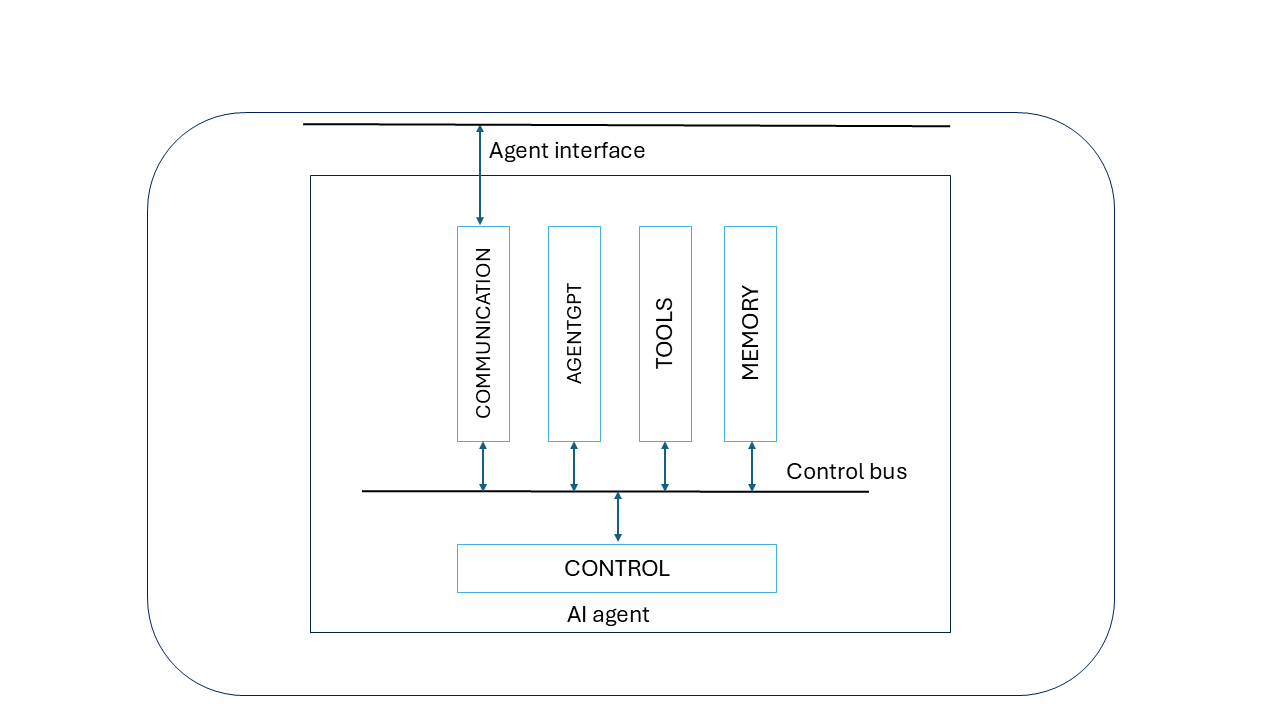
Figure 1: General Framework of an AI Agent
Figure 1 depicts a general framework of an AI Agent that is made up of the following logical components:
- Communication: The interface of an AI Agent to communicate with external components, supporting various networking standards and protocols.
- Memory: Collects and stores data for the AI Agent for task continuity and self-improvement, including short-term memory (external input, historical inference result, temporary information) and long-term memory (knowledge, profile). The cognition of the system.
- AgentGPT: The AgentGPT is trained with domain-specific knowledge (e.g. on a certain problem class) that matches the responsibilities of the AI Agent that it resides in.
- Tools: Functions and APIs that are used to obtain additional information or abilities that are not present in the AgentGPT. These can include search engines, databases, calculators, calendars, maps, APIs for specific services, and other task-specific utilities.
- Control: The executive function of the agent that orchestrates the interaction between all components.
They can:
• Accelerate development by providing in built components.
• Provide consistent approaches to common challenges.
• Support scalability by moving from simple agent to complex multi agent environments.
• Access to a broad range of developers and researchers.
• Foster innovation by handling the foundational aspect of AI agent development frameworks.