EXCLUSIVE INTERVIEW Quantum at scale: why standards will matter
Quantum is entering a new phase: beyond scientific breakthroughs, the focus is shifting to utility, interoperability and scale.
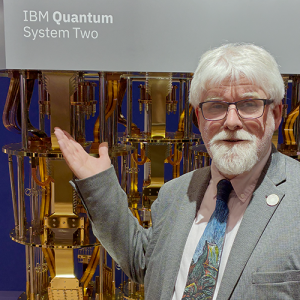
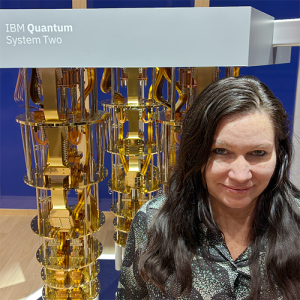
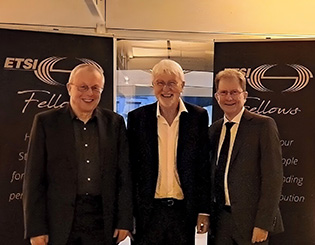
In this exclusive interview, IBM experts, Zygmunt Lozinski, Quantum Safe Networks, IBM, and Lory Thorpe, IBM Research, Quantum Safe Industry Lead, Senior Quantum Ambassador share their views on the global race, Europe’s strengths, the skills challenge and the role standards could play in shaping the quantum ecosystem.
Should we go back to a bit of history to give some context?
ZL: Quantum physics has been around for a century, lasers, LEDs, solar panels, GPS all rely on it. Quantum computing began in 1980 when Richard Feynman and Rolf Landauer brought IBM Research and MIT together. Feynman said: “Nature is quantum. If you want to simulate nature, you need a quantum computer.”
The field stayed theoretical until 1994, when Peter Shor at Bell Labs produced the first quantum algorithm, before quantum computers existed, showing that factoring large numbers (and thus modern security) could be broken. That triggered major investment.
From 2016, IBM moved from prototypes to a working quantum computer on the cloud, giving global access. By 2019, the roadmap to scalable systems was clear. During the pandemic, the first quantum computer outside the US was installed in Germany with Fraunhofer and unveiled by Angela Merkel. Governments accelerated efforts; Spain is now building a national quantum ecosystem with systems deployed in Barcelona and San Sebastian.
LT: Access at scale to classical computing took decades. Quantum became accessible earlier because we wanted to grow an ecosystem, that’s why IBM Quantum is available on the cloud. The question was: how do we take quantum from a scientific curiosity to something useful?
With the IBM Quantum System Two, the latest capabilities are now available on the cloud for telecoms, finance, healthcare, pharma, materials science and more.
ZL: Today over 300 organisations, universities, governments, businesses are in the IBM Quantum ecosystem. Building skills is a key part of this.
Talking about universities or schools, is there a lack of skills on quantum?
LT: Yes. People assume we only need quantum physicists, but the skill set is much broader. You need people who build the hardware and people who use quantum computers.
Like classical computing: I use a laptop, but I can’t build one. Programmers today already have a head start, though there’s still a gap.
“We need people who use quantum, not just those who build it.”
Lory Thorpe, IBM Research, Quantum Safe Industry Lead, Senior Quantum Ambassador
ZL: When we began 10 years ago, we thought everyone would need a PhD in quantum physics, which is true for designing machines. But programming them turned out to be accessible to data scientists using Jupyter Notebooks, because the tools are similar.
We gave universities more teaching materials. We need chemists for drug discovery who can integrate quantum tools, aerospace engineers who know how quantum fits into CAD/CAM, and bank “quants” who already work with linear algebra and adapt quickly to quantum programming.
What are the challenges today to build a quantum computer?
LT: The biggest challenge is the maturity and performance of quantum computers, involving a number of technical challenges to be overcome.
If you already have a working car and someone gives you a new kind of car that performs worse, you won’t see the value, even if the potential is enormous. Quantum computing is evolving rapidly towards becoming broadly useful.
Any examples beyond finance? You mentioned healthcare.
ZL: Pharmaceuticals are a great example. To model how molecules interact, including electron states, we face exponential complexity.
Simulating caffeine, with its 160 electrons and vacancies, would require 2¹⁶⁰ bits, about 10 % of the mass of planet Earth. Impossible with classical computers.
We rely on approximations today. With precise quantum simulation, we could radically improve drug discovery. Today, 90–95 % of candidate molecules are rejected. Better modelling might repurpose many.
Another example: 2 % of global energy is used to convert atmospheric nitrogen into ammonia for fertiliser. If quantum simulation helps improve the catalyst, we could eliminate that energy consumption.
Quantum computers let us model chemistry at levels impossible even if we turned the entire Earth into classical computing hardware.
AI is very energy‑intensive. What about quantum computers?
ZL: Fun fact: the computation inside a quantum processor uses zero energy because it’s reversible.
Energy is spent on cooling and I/O systems. Large‑scale future quantum systems should be far more energy‑efficient. Cooling is closed‑cycle. IBM’s projected systems for 2029 and 2034 use less energy than a few racks of today’s NVIDIA GPUs.
Supercomputers today can use tens or hundreds of megawatts. Quantum may contribute to reduce that.
What is the status of quantum computers in the US?
ZL: We are in the era of “noisy intermediate‑scale quantum” computers. In the next five years, we expect the first error‑corrected quantum systems, far more reliable and capable.
There’s a race between IBM, Google and many others. Prestige awaits whoever gets there first.
And other countries?
ZL: China has a major quantum programme, and is very transparent about it. At the Royal Society Quantum Information event to celebrate the International Year of Quantum, Jian-Wei Pan outlined 20 years of work and a 10‑year roadmap; two weeks later, China announced a new quantum processor (Zuchongzhi 3.0).
China building quantum computers, quantum networks and quantum satellites.
I’d say the US and China are broadly equal: China slightly ahead in quantum networking, US firms slightly ahead in computing.
What about Europe?
ZL: Europe has strong university research and initiatives like EuroQCI for quantum networking. Europe contributed the foundations of quantum theory with the Solvay Conference in 1925 and many Nobel Prizes since.
But in hardware, the US and China are ahead because some quantum hardware requires semiconductor fabrication, very capital‑intensive. Spain is encouraging indigenous quantum computing firms like Qilimanjaro.
“The first real impact of quantum will likely come from sensing.”
Zygmunt Lozinski, Quantum Safe Networks, IBM
Which quantum technologies will arrive first?
ZL: Quantum sensing is most likely to make an early impact.
A brain sensor in a bicycle helmet developed at Nottingham University can replace an room-sized magnetoencephalography scanner. Place it on a child’s head to detect the onset of epilepsy, or on an elderly person to track dementia. The UK National Health Service plans wide deployment once trials finish.
Quantum clocks are also advancing, chip‑scale atomic clocks are the size of a coffee bean, more precise than GPS time signals, and without interference. With precise time, we could build ultra‑precise navigation devices within a decade.
If you have quantum sensors, you need to process quantum information, ideally on a remote quantum computer. That requires a quantum information network (often called the quantum internet).
EuroQCI, going beyond QKD, could become the foundation of a future Europe‑wide quantum information network linking quantum computers and sensors.
What use cases would that enable?
ZL: The most likely is connecting quantum sensors to quantum machine‑learning applications.
You get much better results when you connect qubits to qubits instead of measuring and collapsing quantum states.
LT: There’s debate over which use cases benefit from keeping quantum information intact, but if you want a quantum sensor processed remotely by a quantum computer, you need quantum communication.
ZL: Europe now has quantum computers in the Basque region, in Catalonia, Germany and elsewhere. As machines grow, scientific projects may need more capability than one system has, requiring interconnection.
We hope to interconnect quantum computers and sensors remotely. It’s still research, but it is the motivation for the recent Cisco and IBM announcement: the promise of distributed quantum power.
What should the ETSI Committee on Quantum Technologies focus on?
LT: For many technologies, it’s premature to standardise, but soon we’ll need to ask what is useful to standardise. IBM believes the software layer, access to quantum computers, could benefit from standardisation to improve interoperability.
ZL: ETSI can produce landscape reports explaining how emerging quantum technologies relate to each other. It’s easy for newcomers to get lost.
QKD provides the building blocks for future quantum information networks. Understanding how technologies fit together gives essential context.