
12 February 2025, Yuya Kuno, NFV SOL Vice-Chair
During this meeting, the primary focus was on the normative work for Release 5 and the informative study for Release 6. Key specifications were either completed or finalized during the plenary meeting. The SOL Working Group (WG) finalized a notable group specification: ETSI GS NFV‑SOL 025. This specification defines stage 3 interfaces produced by Telco Cloud data analytics function under the “automation” feature (FEAT20).
Furthermore, the SOL WG initiated work on the next Release 5 drop (ed531), focusing on key features such as policy models (FEAT26) and Generic OAM functions (FEAT24).
In a significant step for the future of the NFV architecture, the IFA WG studies on architectural support for the NFV evolution. The completion of the ETSI GR NFV‑IFA 054 report marked a major milestone, establishing a fundamental framework for future NFV evolution towards the Telco Cloud. Meanwhile, the ETSI NFV community decided to initiate the normative work on the new architecture specification by approving a work item during this plenary meeting. The IFA WG also worked on the specification of physical resource related measurement metrics collected by the Physical Infrastructure Management (PIM) function.
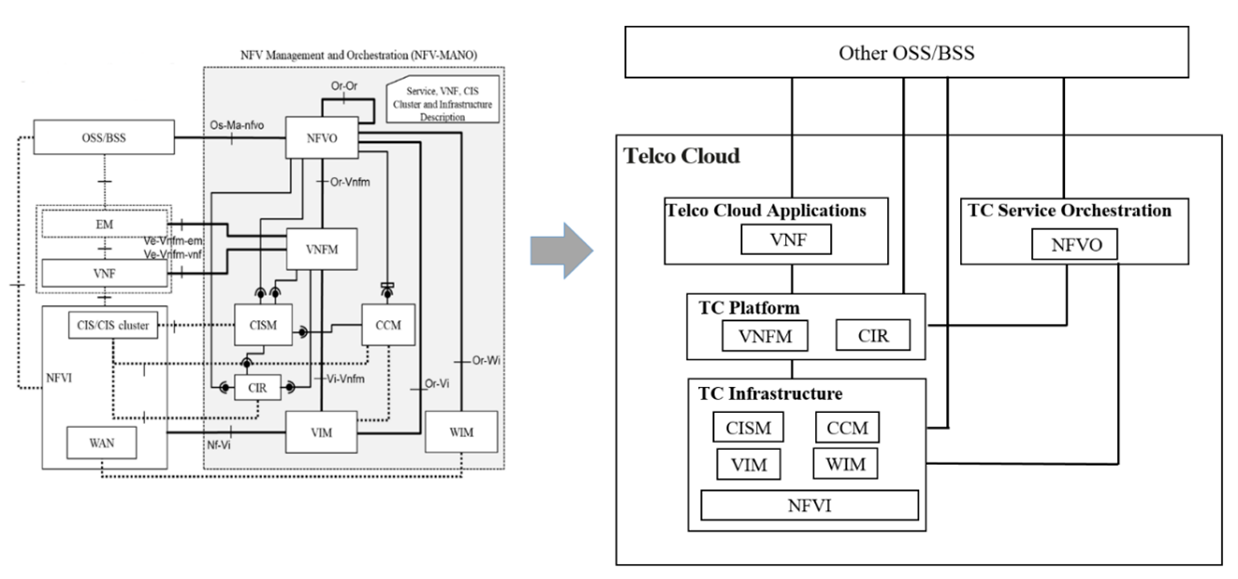
New architectural framework to support NFV evolution
The EVE WG also made significant progress in their studies on new features for Release 6, including latency aspects (ETSI GR NFV-EVE 024), new infrastructure resources for NFV (ETSI GR NFV‑EVE 023), serverless application virtualization (ETSI GR NFV-EVE 025), convergence of computing and network (ETSI GR NFV‑EVE 026) and Model as a Service (ETSI GR NFV‑EVE 027).
Another highlight of this meeting was the drafting of two white papers by ETSI NFV delegates. The first white paper explores the “added value of NFV‑MANO”, highlighting the benefits of NFV-MANO in relation to other industry initiatives. The second white paper discusses the potential evolution of NFV‑MANO towards a more generalized Telco Cloud framework. These documents will soon be published, further complementing the architectural framework outlined in ETSI GR NFV‑IFA 054.
Additionally, the completion of Release 4 was confirmed, with the official publication of the final deliverable, ETSI GS NFV‑TST 010 v4.5.1. Engagement with the OpenStack Tacker community also continued, fostering discussions on improving the NFV specification process.
As the plenary concluded, discussions covered key topics, including 6G core network cloud infrastructure requirements, new documentation approaches for stage 3 and OpenAPI, and a potential restructuring of the NFV standardization process. These activities were part of the ETSI NFV community’s ongoing efforts to enhance standardization and yielded significant outcomes beneficial to the telecommunications industry.
Looking ahead, the ETSI NFV community is excited to reconvene in March 2025, once again in Sophia-Antipolis, France.
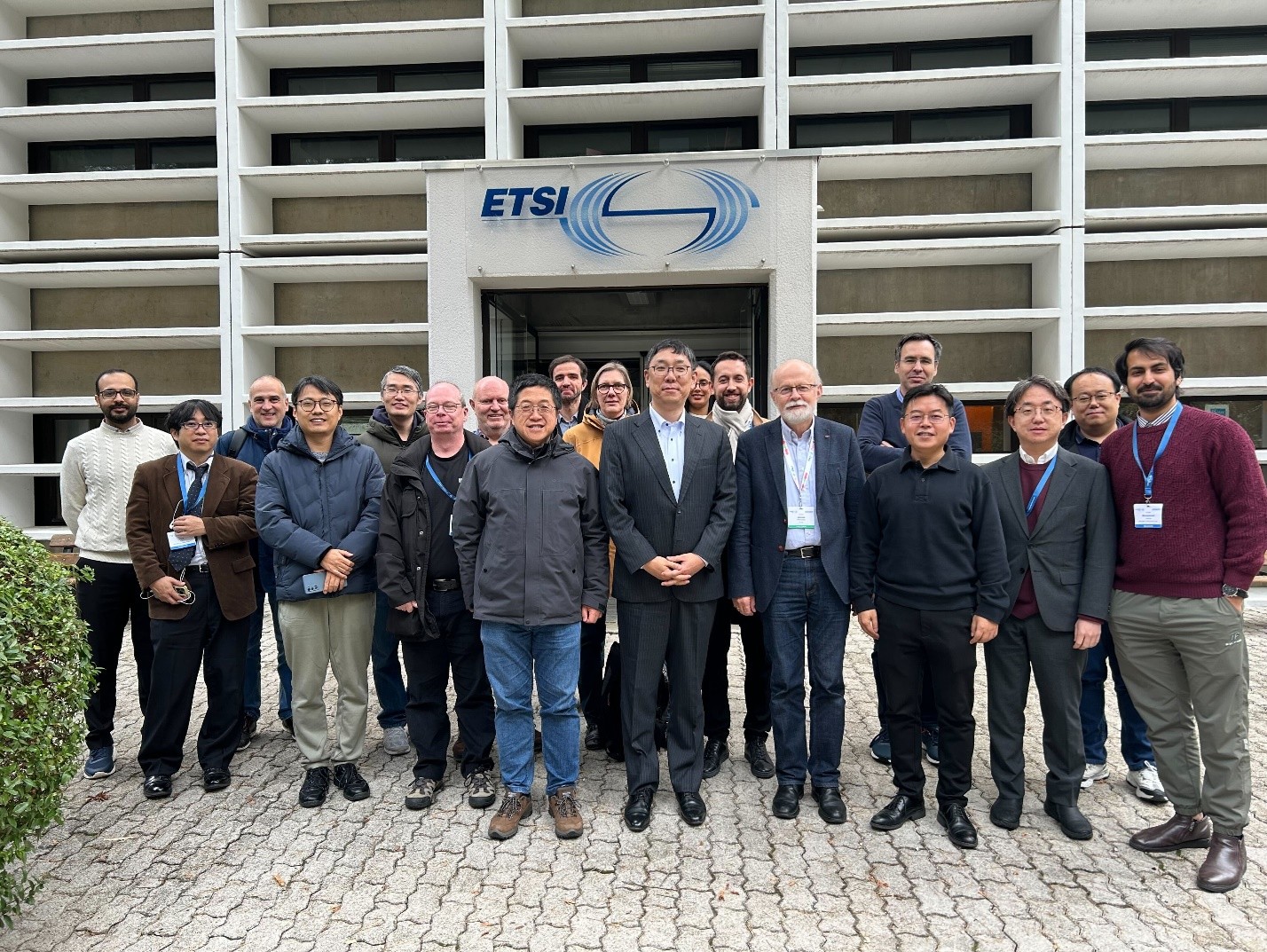
Attendees at NFV#48
