
20 May 2026, Deng Hui, ISG NFV Vice-Chair
The first AI Native Summit, hosted by ETSI and co-organised by CNCF and LF AI & Data, was successfully held during CNCF KubeCon Europe 2026. Core members of the CNCF open-source community, including Orange, China Mobile, Alibaba, Red Hat, Huawei, Microsoft, IBM, Lambda.AI, and Dynamia, joined industry representatives to explore the path for evolving AI Native within CNCF Cloud Native.
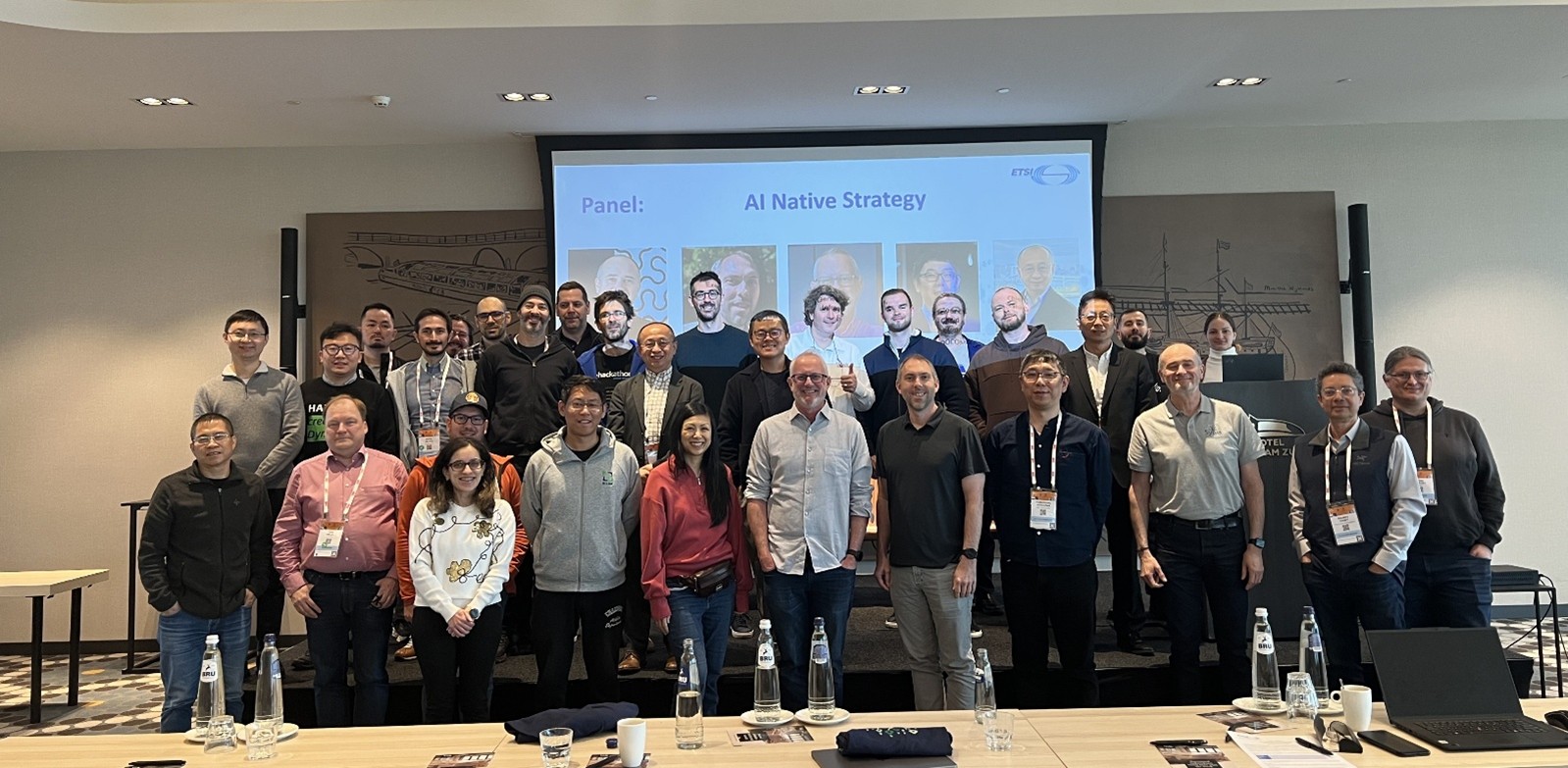 Figure 1: Group photo of attendees
Participants unanimously acknowledged the pivotal role that CNCF have played in shaping the infrastructure layer in Cloud Native. As AI continues to scale, the industry faces an urgent need to collaborate on open standards and open-source projects to build next-generation AI infrastructure that enables efficient, large-scale, and sustainable AI development. The summit marked broad industry-wide motivation to build open, converged AI infrastructure to accelerate the AI transition.
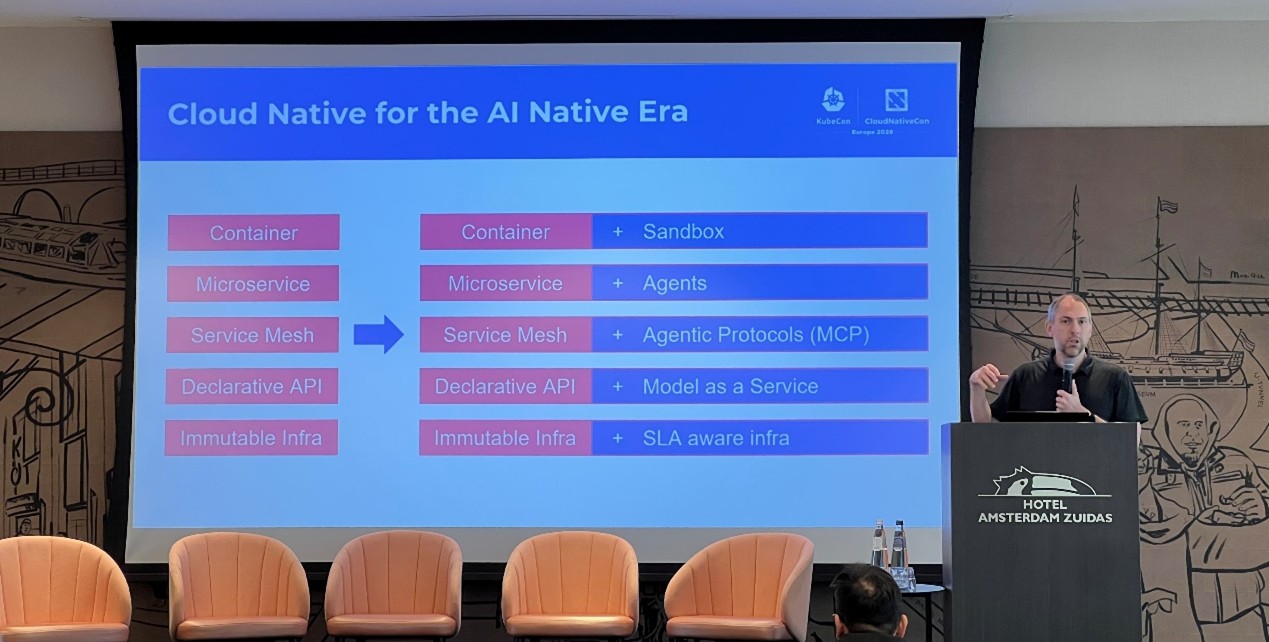 Figure 2: Jonathan Bryce, Executive Director of CNCF
Jonathan Bryce, Executive Director of CNCF, pointed out that AI Native development requires identifying milestone-level projects with transformative influence—similar to Kubernetes® in the Cloud Native phase. He highlighted the need for CNCF to support the three pillars of AI: training, inference, and AI agents. He also stressed the importance of focusing on key technical factors of AI Native to guide the evolution of CNCF architecture and industry practices. In addition, he underscored that AI Native capabilities should be built progressively on top of existing Cloud Native capabilities.
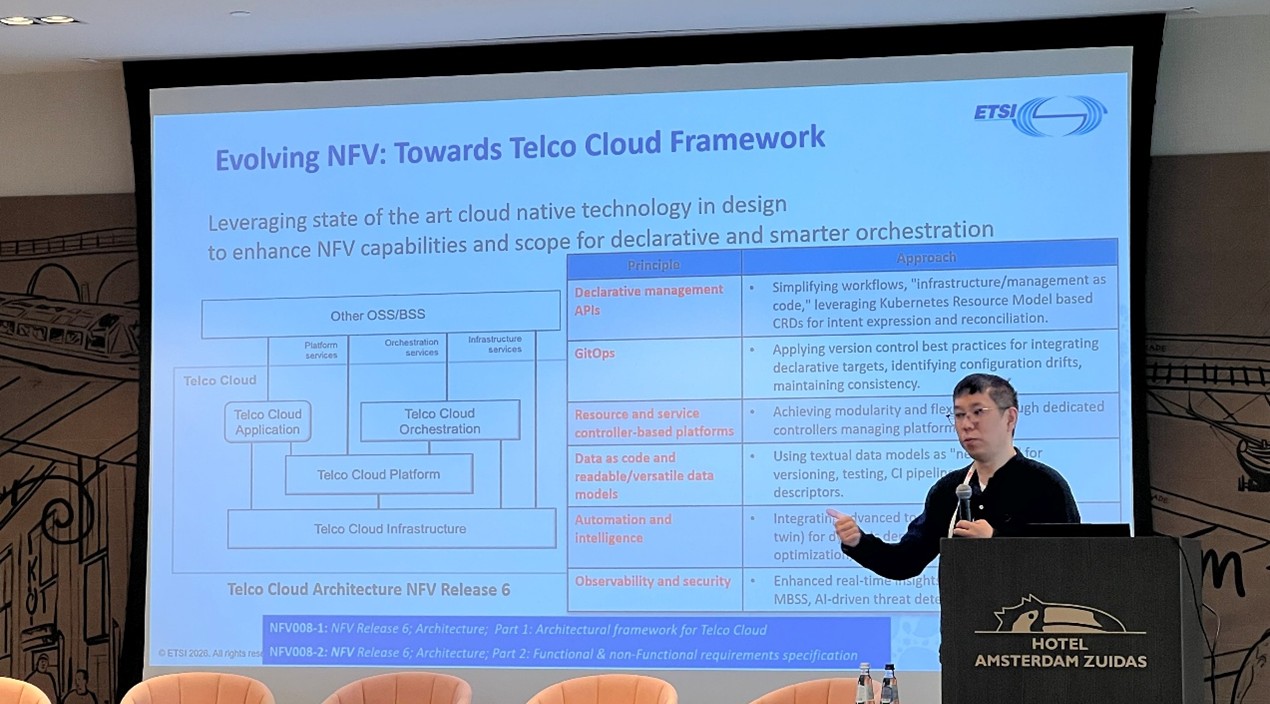 Figure 3: Yoshihiro Nakajima, Chair of ETSI ISG NFV
Yoshihiro Nakajima, Chair of ETSI ISG NFV, outlined the telco cloud’s clear evolution path: from virtualisation to Cloud Native, and now toward AI Native. He emphasised that building “Cloud4AI” – AI-ready infrastructure – requires implementing key technical capabilities such as resource pooling, hyper-convergence, peer-to-peer bus architecture, SuperPoD, and unified resource management, to support the efficient running of AI services.
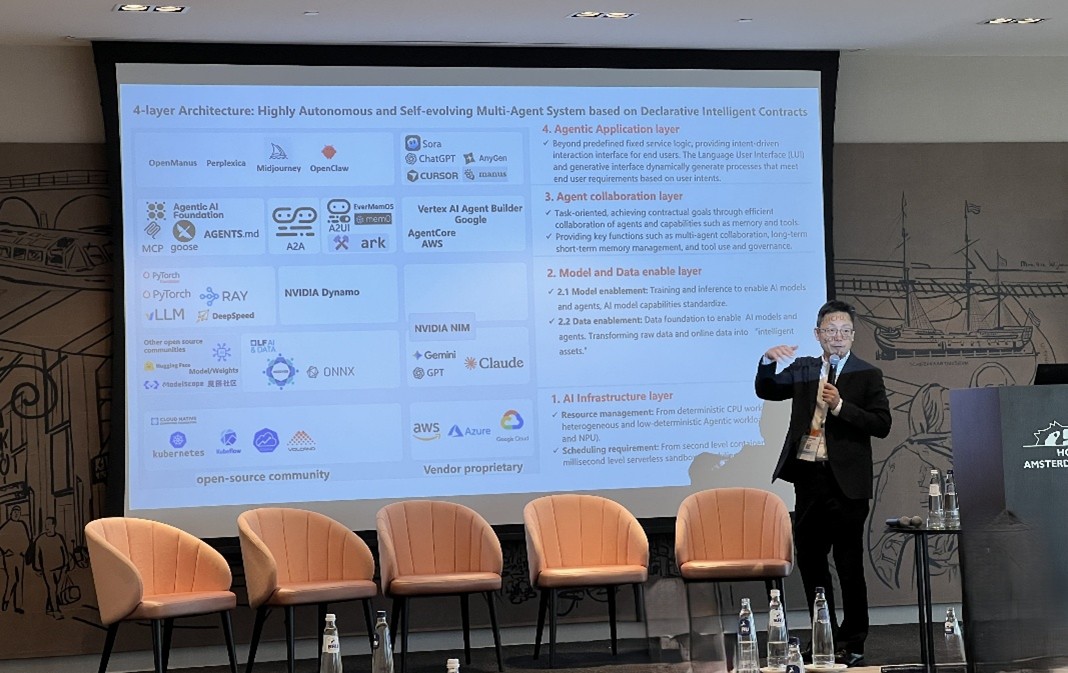 Figure 4: Zhu Haopeng, Fellow of Huawei Cloud Core Network Product Line
Zhu Haopeng, Fellow of Huawei Cloud Core Network Product Line, proposed a four-layer AI Native architecture, four defining characteristics, and three strategies for future-oriented network evolution. He noted that, with the 5G core network serving as a major milestone, telecom networks have largely completed the transition from Virtualised Network Functions (VNFs) to Cloud-Native Network Functions (CNFs). The next decade, he said, should focus on accelerating the evolution toward AI-Native Network Functions (ANFs).
Operator representatives, including Zhang Xiaoguang from China Mobile and Philippe Ensarguet from Orange, emphasised that embracing AI Native will require continuous industry evolution guided by core concepts, as well as the advancement of AI infrastructure for 6G to improve network operational efficiency. Other experts shared visions of AI Native from their respective fields, such as AI Native Networks.
|
|
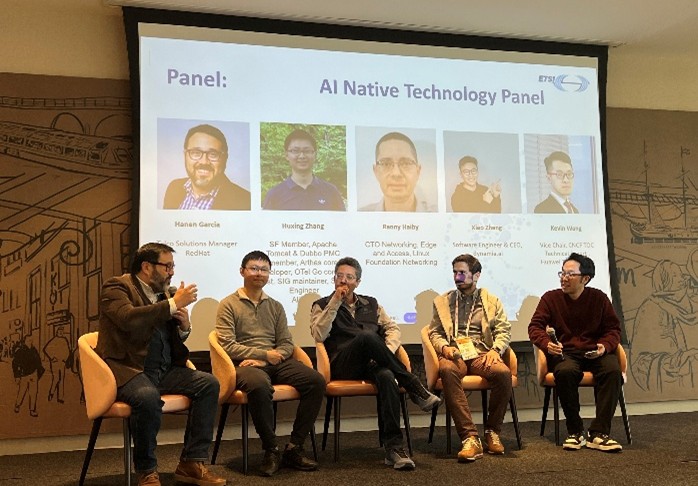 |
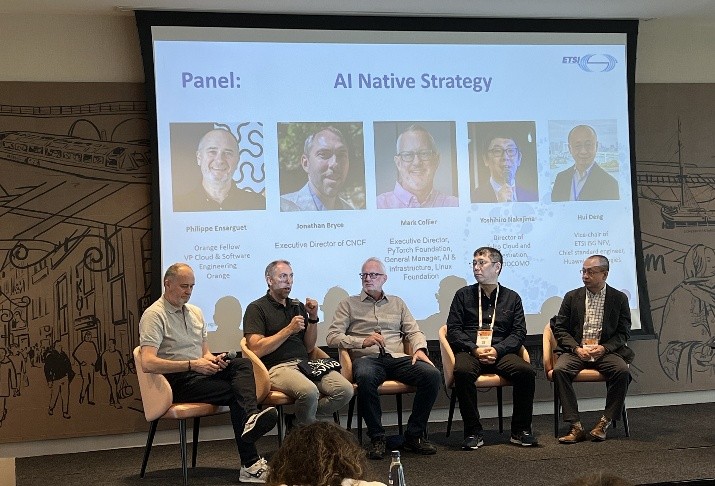
Figures 5 and 6: Two panels
In addition, representatives from the Linux Foundation, Red Hat, Alibaba, Dynamia, and other organisations engaged in in-depth panel discussions on the key technical challenges facing AI Native development, further strengthening industry consensus.
Representatives from CNCF, ETSI, and other organisations concluded that the industry has entered a new phase of development as AI applications expand. AI Native is set to become the driving engine of AI service innovation and industry transformation. It represents not only a technical paradigm shift but also the core direction of future intelligent infrastructure. In this context, collaboration on standards, architectures, and ecosystems has become an urgent priority.
