
5 February 2026, Haitao Xia and Kostas Katsalis, NFV WG IFA Chair and Vice-Chair
From Legacy Networks to Cloud-Native Transformation
The journey of NFV began with a vision to unify network equipment design and foster an agile software ecosystem, paving the way for a fundamental shift in how networks are deployed and managed. But as the ecosystem evolved to embrace cloud-native principles, artificial intelligence, and automation, the existing frameworks became increasingly complex and limiting.
The new ETSI GS NFV 008-1 standard addresses these challenges head-on by introducing a comprehensive Telco Cloud architectural framework that bridges the intersection between infrastructure and application deployment, management, and orchestration. This isn’t just an incremental update — it’s a complete rethinking of how the Telco Cloud should operate in the cloud-native era..
The Four Pillars of the New Architecture
The standard defines four core architectural blocks that form the foundation of the Telco Cloud:
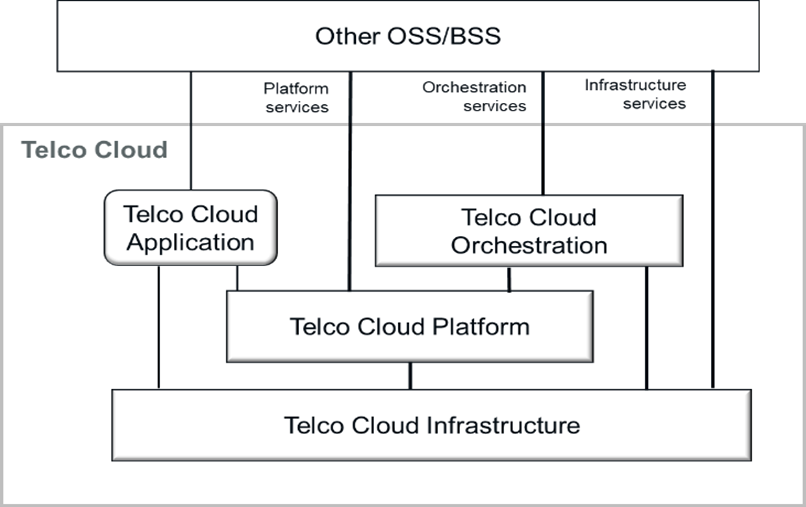
Figure 1: Telco Cloud architectural framework
1. Telco Cloud Application (TCA)
This block represents network functions and other future workloads and services that could be deployed on the Telco Cloud. TCAs can include traditional network functions, AI/ML applications, intelligent agents, edge computing applications, digital twins, and video/audio processing workloads.
2. Telco Cloud Infrastructure (TCI)
This block encompasses the underlying hardware and software environment in which Telco Cloud Applications are deployed, along with the corresponding infrastructure management services. It simplifies the complex NFVI structure by providing a unified abstraction for physical infrastructure, virtualised infrastructure, OS container infrastructure, and emerging infrastructure types, such as serverless/WASM and eBPF. The TCI serves as a highly distributed foundation spanning access networks, edge environments, and central cloud regions, and pools and abstracts heterogeneous infrastructure resources into a programmable software-defined fabric.
3. Telco Cloud Platform (TCP)
The platform block provides modular services for TCA lifecycle management (LCM) and operations, administration, and management (OAM). This includes services for application telemetry management, configuration management, repository management, and certificate management. The platform simplifies the management of carrier-grade software and facilitates application portability across distributed infrastructures by adopting a declarative approach.
4. Telco Cloud Orchestration (TCO)
This is the brain of the operation—the network-level orchestration functionality that reconciles high-level business/service requirements with management requests in the Telco Cloud, shifting from error-prone provisioning to closed-loop automation. It’s expected to further employ AI capabilities, including analytics capabilities and intent management.
Key Innovations and Constructs
The standard introduces several critical constructs that enable this new architecture:
- Telco Cloud Application Component (TCAC)
TCAs are composed of one or more TCACs—atomic software building blocks that can be managed independently. This modular approach enables granular lifecycle management, allowing individual components to be updated, replaced, or scaled without affecting the entire application. - Telco Cloud Link (TCL)
Similar to virtual links in traditional NFV, TCLs abstract connectivity between TCAs, TCACs, and Telco Appliances (TAPs). These links are enhanced to span both virtual and physical endpoints across wide area networks, enabling distributed deployments across multiple infrastructure points of presence. - Telco Cloud Connectivity Graph (TCCG)
This construct represents the complete networking topology of connected applications and appliances, providing a holistic view of service connectivity and enabling intent-driven service assurance and automated troubleshooting across complex multi-domain network topologies. - Service Interfaces
The architecture defines a comprehensive set of service interfaces categorized into orchestration services, platform services, and infrastructure services. These interfaces enable seamless interaction between architectural blocks and external systems like OSS/BSS. - Backward Compatibility and Evolution
One of the most significant achievements of this standard is its careful mapping to legacy NFV-MANO constructs. The framework maintains up to some level of backward compatibility while providing a clear path for evolution. Telco Cloud Infrastructure resources can be mapped to virtualised resources, physical resources, and container infrastructure objects from previous standards. Similarly, TCAs and TCACs map to VNFs and VNFCs, enabling existing deployments to transition to the new architecture without disruption. - Industry Impact and Strategic Significance
The release of ETSI GS NFV 008-1 marks a watershed moment for the telecommunications industry. This standard enables operators to:
• Accelerate 6G Readiness: The framework is specifically designed to support future network generations, including 6G, by embracing cloud-native and AI-native principles.
• Simplify Operations: By introducing declarative management, reducing complexity and providing standardised interfaces, the architecture lowers operational costs and improves efficiency.
• Enable Multi-Vendor Ecosystems: The standardised framework stimulates innovation by enabling interoperability between different vendors’ solutions.
• Support Distributed Deployments: The architecture’s distributed nature supports edge computing, central cloud, and hybrid deployments seamlessly.
• Enhance Automation: With capabilities such as built-in analytics and intent management, the framework enables higher levels of automation and intelligent operations.
Looking Ahead
ETSI GS NFV 008-1 is more than just a technical specification—it’s a strategic roadmap for the telecommunications industry’s digital transformation. By providing a flexible, scalable, and future-proof architectural framework at a high level, this standard, as guidance, empowers operators to build agile networks that can flexibly meet their specific demands of 5G Advanced, 6G, and beyond. As the industry continues to evolve, this framework will serve as the foundation for innovation, enabling new services, applications, and business models that were previously unimaginable.
The journey from traditional NFV to the Telco Cloud is now well underway, and ETSI GS NFV 008-1 provides the compass to navigate this transformation successfully.
